



Location
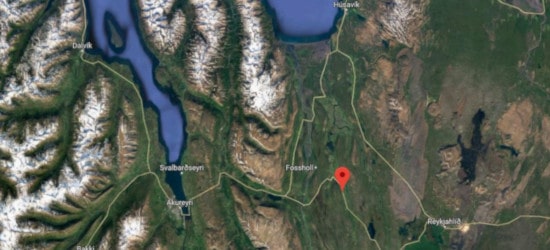
The land of Kárhóll is in the northern part of Iceland, close to the municipality Laugar, and 45 minutes from Akureyri.
Aurora research has been conducted in Iceland for decades with France, Britain and Japan operation research bases.
Gunnlaugur Björnsson from the University of Iceland explained the observatory and its purpose in an interview with the Icelandic National Broadcasting Service, RÚV.
"The purpose is first and foremost to learn more about the interplay between the sun and the magnetic field of the earth and the reaction of the magnetic fields when hit by solar winds. Iceland is very well located for this kind of research as the aurora belt lies over the country."
He also explained what the Arctic Observatory will include.
"At first All-sky Imagers will be inserted, a spectograph and a magnetometer. In the future, it will be possible to insert more tools for research."
He also highlighted the importance of the observatory for the University of Iceland.
"We will gain access to all the data. The equipment is too expansive for us to buy so we welcome this cooperation highly."
About
The land of Kárhóll is owned by a non-profit organization named Arctic Observatory ses which will provide necessary land, facilities and operational services for the Arctic Observatory. Polar Reasearch Institute of China (PRIC) will lease the land for the operations of the observatory.
The project at Karholl will have a very positive impact on its local environment, both culturally and economically. The centre is planned to be open to the general public and build a bridge between scientific research and the daily life by operating a visitor´s centre dedicated to the aurora borealis.
The visitors centre will be a very welcome addition to the existing flora of service and recreation possibilities in the vicinity. A local non-profit organization, Arctic Observatory, has been established to provide facilities and logistics for the CIAO.
See also: Introduction about the project from senior scientist Hongqiao Hu from PRIC about the observatory. The introduction is from the summer of 2012 and was introduced on various locations.


